
A Head Start On Performance
How Early Integration Sets the Stage for Better Homes
Architects working on Nantucket know that energy performance isn’t a secondary consideration—it’s a structural driver. The island’s HERS requirements—combined with Massachusetts’ evolving code—mean that decisions made in the earliest phases of design have outsized influence on compliance and architectural freedom.
The most successful projects are those where performance strategies are integrated from day one, shaping the envelope, informing detailing, and supporting the aesthetic and experiential goals of the home.
Expanses of Glass and the Perfect HERS Score
Continuous insulation, window placement, assembly choices, and material selection are no longer optional enhancements. They are foundational elements that determine whether a design will meet the required performance thresholds without compromise. Early conversations about wall depth, roof assemblies, and thermal continuity help ensure that detailing stays elegant—rather than forced later in the process.
This planning matters far beyond efficiency. When the envelope is resolved early, architects can confidently locate large expanses of glass, open view corridors, and wide-span doors—all while staying within target HERS ranges.
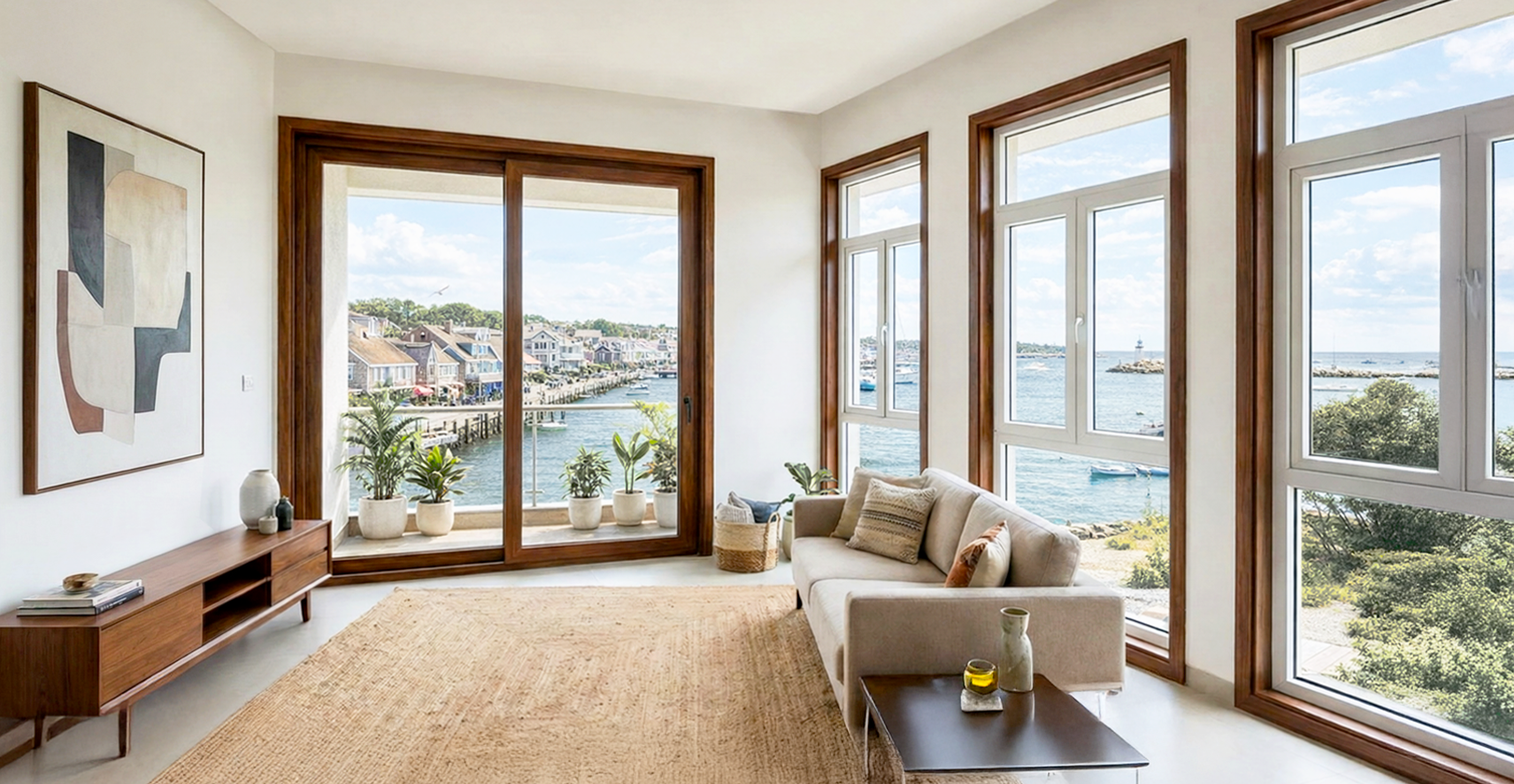
Performance isn’t an add-on — it’s where design begins.
Compliance Advantages and Long-Term Value
Massachusetts now provides point “adders” for low-carbon, biogenic materials such as wood fiber boards, hemp, straw, and other plant-based products. These materials carry measurable benefits: carbon sequestration, durability, moisture management, and verifiable contributions to HERS scoring. For many custom residential projects, these assemblies—when planned early—are low-hanging fruit—high-impact performance upgrades with straightforward implementation.
Indoor Air Quality and Intentionality
As building envelopes improve and homes become tighter, indoor air quality becomes a core design concern. Thoughtful strategies—such as responsive, demand-controlled ventilation and real-time air quality monitoring—help maintain healthy indoor environments while supporting overall energy performance. These systems are most effective when incorporated early, allowing mechanical design, envelope detailing, and architectural intent to reinforce one another.
A Proactive, Documented Path
Every new home must be verified by an independent HERS rater before certificate of occupancy. Blower door tests, duct leakage limits, and documentation of the building envelope all demand consistency—from initial sketches through final inspections. Trying to align these requirements late in the game, after detailing is fixed, limits options and results in avoidable rework.
Incorporating permit documentation, rater coordination, and assembly specifications in the design phase brings clarity to both teams. It also ensures that energy performance supports, rather than constrains, the architectural vision.
Code Requirements: Beyond New Construction
Major renovations and additions exceeding 1,000 square feet trigger the same performance expectations as new builds. EV-ready parking is now required for all residences.
These thresholds matter in a design culture that prioritizes both preservation and adaptation. Planning early gives teams the flexibility to respond thoughtfully to existing structures while meeting new standards.
A Collaborative Approach
High-performance residential construction is advancing quickly. New assemblies and materials are going mainstream, and builders are refining practical, repeatable methods for delivering them at the highest levels of craft. When architects and builders collaborate early, the benefits are direct: predictable costs, fewer design iterations, smoother inspections, and a shared understanding of how to achieve ambitious energy targets without compromising character or beauty.
For architects designing complex, view-driven homes on Nantucket and throughout New England, early integration isn’t merely efficient—it’s the best way to protect design intent while meeting today’s environmental and performance expectations.

Give us a look.
Explore the Stephens & Company Look Book ––a curated showcase of distinctive homes, artisanal detail, and exceptional design.
All built on Nantucket.